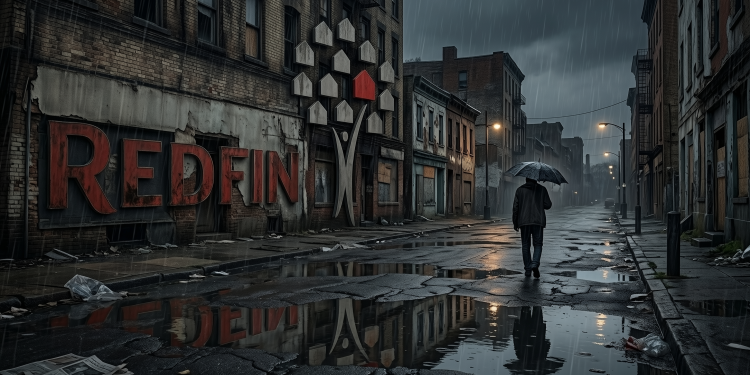
A rainy night scene, sad man walks down the street, the old Redfin logo is on the side of a building.

Requiem for a real estate dream: a Redfin retrospective

Now that a year has passed since Rocket Companies completed its acquisition of Redfin and it’s been six months since Redfin had its own CEO, I thought it would be worth reflecting on what Redfin accomplished during its two-decade run as an independent company and how the Redfin of 2026 became exactly the kind of company that the Redfin of 2007 was created to fight against.

A Fiery Beginning

Although it was founded in 2004, it wasn’t until 2007 that Redfin really hit the national scene in a big way when its CEO went on 60 Minutes and called real estate “by far the most screwed up industry in America.” For most of their existence, their stated core mission was to “redefine real estate.”

At the beginning, Redfin’s strategy to pull off this mission was based on two core differentiators that made them different from traditional real estate brokerages:

  1. A big commission refund to homebuyers and low flat fees for sellers.
  2. Salaried agents that earn bonuses based on customer satisfaction rather than commission.

As explained in the 60 Minutes appearance, Redfin in 2007 charged a flat fee of just $3,000 to represent a home seller and refunded two thirds of the commission to home buyers. And Redfin’s crusade against commissions wasn’t just about saving customers money—the way they compensated their agents was revolutionary, as well. Here’s the CEO railing against paying agents on commission in a 2007 post on their site:

But our problem with commissions is not simply that they’re too high; our problem is with the commission itself, because it pays the buyer’s agent more when his clients pay more. In other words, rather than being offset by better negotiations, the buyer agent’s commission actually causes worse negotiations.

This is why we decided to pay Redfin agents a salary with a customer satisfaction bonus, not a commission. Agents do what you pay them to do, we reasoned, and we believed our agents would be more likely to get the price our customers wanted.

It was this passion and pro-consumer mission that drew me to work for Redfin, first from 2010 to 2013 then again from 2018 to 2022. Throughout my time at the company I worked with lots of smart, passionate people who were also committed to this mission, but in the end, it didn’t matter…

The Fire Fizzles Out

Unfortunately, over time the “most screwed up industry” ended up redefining Redfin a lot more than the other way around.

By the time Rocket acquired them in 2025 Redfin was charging home sellers a straight 2% commission (1% if you also buy with them) and if there is any commission refund at all still going to buyers they certainly aren’t advertising it anywhere.

At some point along the line their customer-satisfaction-focused agent pay model was also completely tossed out the window. These days their agent recruiting page touts “a big traditional split” of the commission for agents that come to work for Redfin. I guess they didn’t have such a big “problem with commissions,” any more. Honestly I’m not even sure why a homebuyer would choose to work with Redfin today, as there seems to be virtually nothing that differentiates them from every other real estate brokerage anymore.
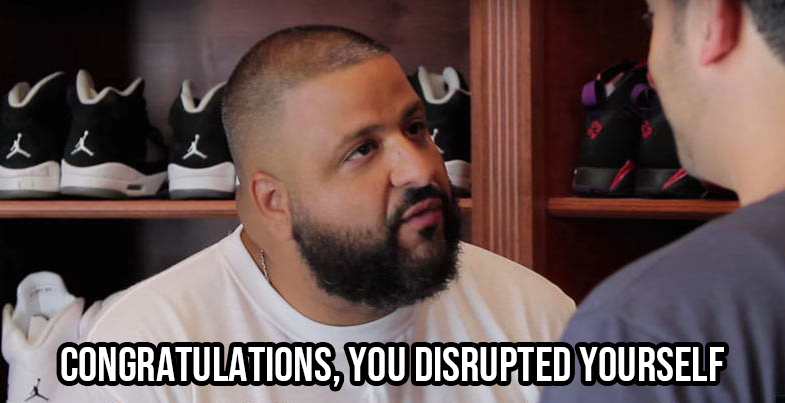
meme image: "Congratulations, you disrupted yourself"

Maybe it was an unwinnable fight from the beginning. Maybe the real estate industry is just too entrenched. Or maybe a total abandonment of pro-consumer principles was baked in from the start by the venture capital funds that backed the company. One way or another, it seems that enshittification was inevitable, which is truly sad because there were always a lot of people at Redfin who really believed in making real estate better for consumers. We just never figured out how to get those consumers to be as passionate about the change as we were.

Where’s the Beef?

So what did Redfin accomplish by completely throwing out their founding ideals and going all-in on traditional real estate commissions? Not much, it turns out. Here’s how the company performed between 2005 and 2025:

  • Profit: Never turned an annual profit.
  • Growth: Never broke above single-digit market share.
  • Capital: Blew $743 million on two big acquisitions (RentPath & Bay Equity) that never improved their bottom line.
  • Labor: Cut over a quarter of their employees across six rounds of layoffs when the market softened.

And in the end, the value of the company was barely changed during their entire time as an independent public company, selling out to Rocket eight years post-IPO for $1.75B—just 3% above their $1.7B market cap at the close of trading on the day of the 2017 IPO.
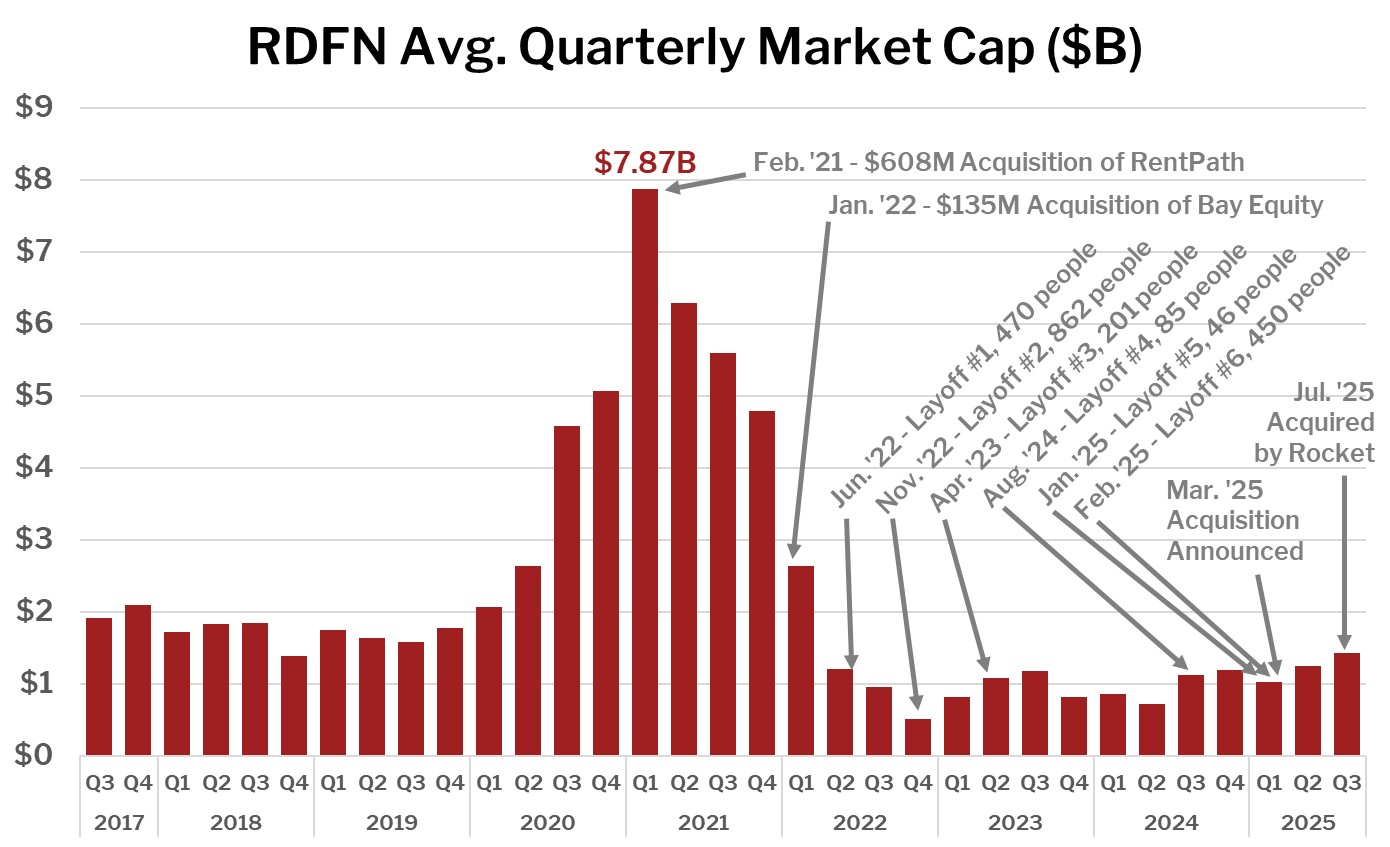
Bar chart showing Redfin average quarterly market cap in billions of dollars. Starts at just below $2 billion in late 2017, surges to just under $8 billion in 2021, falls to just under $2 billion by late 2025.

It’s worth noting that despite all of this, and the fact that my own job was eliminated in the second of those six layoffs, I do still own a few shares of what was Redfin and is now Rocket stock. I guess some part of me still can’t fully let the dream go.

Nothing Left to Get Excited About

In 2026 as part of Rocket Companies, Redfin spent at least $8 million (probably quite a bit more) to run its first ever Super Bowl ad, a fitting cap on its decades-long transition from feisty disrupter to milquetoast mainstream also-ran. But will a Super Bowl ad finally be the thing that breaks them through to the masses? Well, a week after the game I asked my parents if they had seen the ad. They said they hadn’t, so I began describing it to them, and then they realized they had seen it, but did not realize it was an ad for Redfin. This is despite the fact that they are more primed than the average consumer to notice Redfin, given that I worked there for over seven years.

In two decades, Redfin went from landing a glowing 60 Minutes segment for free with a memorable, fiery tirade about a screwed up industry to paying millions to push a generic, mushy message that doesn’t even register as their own. To me that doesn’t feel anything like success—it feels like a whole lot of missed opportunity.

I’m intentionally not naming any names here because again, I worked with a lot of smart, capable, and good people at Redfin. My coworkers were kind and welcoming, and the company fostered a lot of great talent. In fact I’m very glad to be working with many of them again at a different company today. The sad reality is that the eventual tragic trajectory of Redfin was likely baked in from the beginning—we were all just along for the ride.

The Redfin dream of redefining real estate was—and still is—exciting, but in retrospect the way things played out just leaves me with a very different feeling: disappointment.
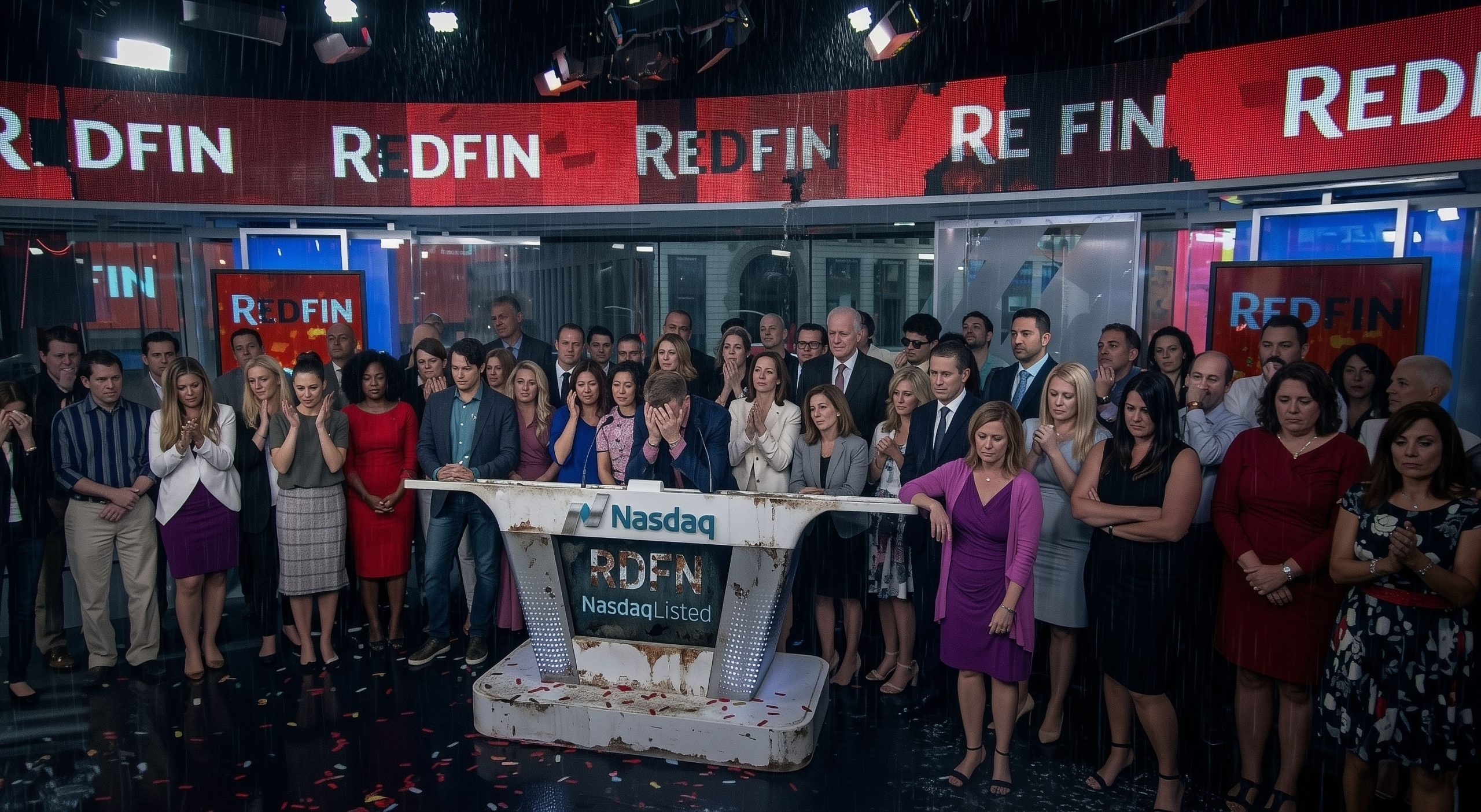

AI-altered image of Redfin executives ringing the NASDAQ opening bell, broken TV screens, everyone is sad, somehow it is raining indoors.

What I learned making 300 episodes of my podcast “Dispatches from the Multiverse”

After seven years, 300 episodes, 120+ hours of content, and countless time spent editing, today I posted the grand finale of my weird, dry, improvised audio drama podcast, Dispatches from the Multiverse.

During our run we’ve had what I would describe as “mild success.” Across the entire series, we got over 700,000 downloads / streams. Our first episode accounted for about 10,000 of those listens, but most episodes tended to get around just 1,500. We run a listener Discord that has about 30 members, and a Patreon that topped out at just over 30 paying members.

We saw slow but steady growth in listenership for about the first three years of the show, but around 2022 things sort of plateaued, and we couldn’t seem to reach a larger audience. That stagnation, combined with the fact that we had an unexpected addition to our family in 2023 led me to finally make the decision to bring the show to an end.

Now that it’s over, I thought it would be cathartic for me and possibly enlightening for others to share some thoughts about what we did well and where we fell short.

What we did well

First and foremost, we connected with our listeners, as evidenced by this excerpt from a recent email I received from one of them:

The world you created was funny, quirky, different, mysterious, and totally immersive… it’s something I feel really connected to. … The show you’ve made is amazing, the extent to which you’ve created and produced it is amazing, and you really have done some great work for many people with no profit to yourself. and that in itself is amazing.

That’s just a small part of a very kind note that one of our listeners recently sent us, and it makes me feel so great about what we’ve created. Thank you so much C.L. for sharing with us.

As for the nuts and bolts of it, I really feel like our show had great quality audio, good editing, and most importantly it was fun to listen to (and to make). I didn’t spend a ton of money on my setup, but I did at least buy some decent mics and try to treat the recording space to minimize echos, and in my opinion, that effort paid off. I also personally put hours of work into editing every 20 to 30-minute episode, choosing just the right sound effects, background ambience, and deliberately pacing our lines to maximize comedic timing.

We were also very consistent in our release schedule. For the first five years, we were a weekly show, and a new episode went up every single Tuesday morning, without fail. Around the five-year mark my wife and I had a baby so the show made a pre-announced move to monthly for a year, then to every-other-week for the final year. Whatever our schedule was, we never published an episode late, or skipped a week, or uploaded a re-run or some other filler like an episode of some cross-promoted show.

Speaking of promotions, I am proud of the fact that we never ran any advertising. I get that people have to pay the bills, but I find most podcast ads to be pretty off-putting, and especially in an audio drama I feel like they really destroy the sense of space that a show is trying to create. So I’m glad we never did that—not counting the fake parody ad reads that we sometimes did for things like “ButterHelp Online Cow-nseling” or “ATEsleep,” which I always thought were pretty funny.

I also think that I did a pretty good job picking my partners for the show. Both of my co-hosts were willing to fully commit to the bit, and did a great job at it. The original co-host Scott is very clever and had such a great ability to deliver a broad range from deadpan to over-the-top silly. He decided to leave the show after about two and a half years, and I feel like we handled the transition well. We “wrote out” Scott’s character over a lengthy storyline and came up with an amusing in-universe explanation for bringing in J.R., the new co-host.

Since J.R. had already appeared as a guest in a good number of previous episodes he knew the feel of the show well. Plus, J.R. and I have known each other for nearly 30 years, so we had a great dynamic together on the show. Scott also brought his character back now and then in a series of guest appearances, especially for major milestone episodes, which was fun for both us and the listeners.

Where we fell short

Our biggest challenge throughout the run of the show was probably the same as most shows: awareness. It’s just really hard to get your show in front of people who might enjoy it, and get them to actually give it a chance. The struggles of the attention economy are real.

The only big success we had in marketing the show was when I managed to get an ad at the front of Episode 7 of “Unseen,” a new show made by the crew that created the popular podcast Wolf 359. I took a gamble and backed their Kickstarter at a tier that allowed me to be a sponsor of an episode, which ended up driving a pretty good number of new listeners to our show when that episode dropped in December of 2020. But other than that, we never really managed to grab much attention.

We tried experimenting with ads on various social media channels. We tried posting regularly on social media. We tried engaging with relevant communities on Reddit. We consistently brought on guests and asked them to share the show. Nothing ever really moved the needle.

It’s also worth noting that during the lifetime of our show, more and more people began to get their podcasts from YouTube for some reason. We did try putting the show on YouTube, but for an audio drama there really isn’t a good way to create a compelling video component without a huge budget for something like custom animation. Even Hello from the Magic Tavern—one of the most popular, longest-running audio dramas out there and a big inspiration for our show—only gets a few hundred views per episode on their YouTube videos, which usually just run a generic looping animation of the three hosts as the video component.

Another angle I tried was getting press. There isn’t a ton of podcast-specific media out there, but there are a handful of people who write about podcasts on sites like The Verge, Vice, Vulture, The A.V. Club, and BoingBoing. I wrote personalized pitches to quite a few of the specific authors who had written about other shows similar to ours, but literally never heard back. Just total radio silence. Similarly, we never manage to get any traction with any of the various awards that are out there recognizing podcasts, which can often be a gateway to getting press, and vice-versa.

What held us back

Looking back, I can identify a few things that I think might have limited our success. First off: the show’s name.

I spent a pretty good amount of time brainstorming names for the show, rejecting ideas like “Dimension Cast” and “Multiverse Pop” before eventually settling on “Dispatches from the Multiverse,” but in hindsight I think I should have kept looking, for two main reasons. First, I think the name is a bit too long. It’s kind of a mouthful, and not as memorable as something shorter could have been. Second, I think putting “multiverse” in the title may have been a mistake due to that word’s strong association with comic books in many people’s minds. If people thought our show had something to do with comics, but they weren’t interested in that, they might have just immediately passed us by. Or if they were interested in that but listened and found out we had nothing to do with comics, they might have been disappointed.

Another thing that limited our reach was the fact that I’m just not well-connected with influential people. If you know the right people it’s easy to get press to review your show, or people with large audiences to post about you on social media. Even painfully mediocre podcasts hosted by celebrities can pull in a large number of listeners purely on the strength of their connections and pre-existing fan base. Unfortunately we just don’t know enough of those “big name” people.

My co-host J.R. also had some thoughts about why we hit a plateau:

It is a little mysterious that the show didn’t take off, to me. Probably this is because I think we are funnier than we really are? It seems strange that a podcast of reasonable quality without constant ad interruptions should do better than other podcasts of similar quality that have ads.

I suspect the market for podcast discovery is not really driven by pure quality. I remember hearing about research into which songs will take off in a group of people. I remember they ran experiments multiple times, and the songs that soared in popularity and “went viral” in the group were more or less random. In other words, any media that meets a minimum quality bar can “go viral”, and most of it is just luck. At least, that’s what I remember. I don’t have links or anything, nor do I plan to go hunt it down. However, if this is true, the lesson for me is not “make something great,” but “take lots of shots on goal” with things that are “good enough,” whatever that means.

While we did have a good fan base, they apparently weren’t the type to enthusiastically share our show online. Whenever I’d see a thread on /r/podcasts of someone looking for recommendations, none of our fans showed up to promote us. Back when Twitter was fun and not a dumpster fire of hate and ignorance I would regularly search on there to see if people were talking about us, only to come up empty. I don’t know if we just never reached a critical mass of fans to see that kind of organic promotion or if our listeners just didn’t think we were that good, so they chose not to share.

It’s also entirely possible that our biggest problem was that the show was just too weird and/or too niche. Personally, I thought it was pretty funny, but I recognize that I don’t have a typical mass-market sense of humor. Maybe there just aren’t that many people out there who would enjoy listening to a dry, weird show about visiting parallel dimensions.

Closing Thoughts

To be clear, I am very pleased with the podcast as a whole. I am happy that we created it and proud of the finished product. While I have some minor regrets about our execution, there is very little I would change about the content. I still laugh at our episodes when I re-listen to them, and frankly I am in awe at the sheer volume of the ridiculous, complex lore we created. We have received some very nice emails from fans through the years who love what we’ve made and I hope more people will continue to discover it even though the show is complete.

From J.R., a.k.a. Jack Strobe:

Another measure for success of a project is: did I make the world a better place than it would be without this project? For Dispatches, I believe we pretty clearly did. For people that share our sense of humor, and happen to find us, they get many hours (hundreds?) of free entertainment. Our existence also makes it just a hair more difficult for someone to fill that niche with a more commercial product with annoying ads. I think the world is a better place because of this podcast.

From Scott, a.k.a. Wilson:

I like J.R.’s comment about the world being a better place with the podcast in it. I honestly think it’s one of the coolest things about being a part of it. Knowing that I was able to make someone laugh who I’ll probably never meet, who potentially lives an ocean away from me is just incredible to me. I love the idea that we made someone’s day just a little bit better. What more can we ask for?

I am immensely grateful to the listeners and it was an absolute pleasure to work with Tim, J.R., and the other random bunch of misfits we assembled to do the show.

A highlight of my life. Thank you Tim for including me.

Photo of a drink bottle being poured out onto a laptop keyboard. The laptop is sitting on a wooden table outside, next to a house, with trees and a sunset in the background. AI-generated.

🪦 R.I.P. My Tech Career: 2010-2022

It’s time to call it. Pour one out for my career in tech. It’s dead.

It was killed by the one-two punch of layoffs and the worst job market I’ve experienced in my entire professional life. At my former employer and across the tech industry, uncaring executives are desperately trying to limit the damage they inflicted on their companies through reckless spending and over-expansion during the ZIRP era, and professionals like me are suffering the ongoing consequences.

I loved my job. I loved the company, the mission, the leadership, the work, and the coworkers. For most of the past 18 months since it was unceremoniously taken from me I have been searching for a decent replacement. I wasn’t naïvely thinking that I would find another dream job–just a place to work where I can make enough money to pay the bills and feel marginally good about what I’m doing. Unfortunately, after many hundreds of applications, a very small handful of interviews, and an endless stream of rejections and ghostings, I’ve come up utterly empty-handed.

This job market has left me defeated, dejected, and demoralized, and I’ve decided that I’ve had enough. I’m done spending hours a day searching for jobs that align with my skills, writing enthusiastic cover letters, fine-tuning my resume, filling out applications, and sending cold emails to hiring managers, all for literally zero return on my substantial investment of time and emotional energy. It’s time to move on.

Of course, I fully realize that a post like this is likely to turn off some potential employers, but apparently I’m already unemployable, as evidenced by the past 18 months, so I don’t really have anything to lose now, do I?

To be clear, I’m still open to gainful employment. It would be great to have a paycheck, paid time off, health insurance, and all that. If you are someone that I’ve worked with in the past and you have a job that you think I’d be great at, by all means, drop me a line, let’s chat! But I am done with the endless, hopeless, fruitless cycle of searches, applications, and rejections.

Barring some deus ex machina resolution where the perfect job just falls out of the sky into my lap, what does the next phase of my career even look like? Well, that’s still TBD. Obviously I’ll continue to work with my wife to make our little retail tea and spice shop Chai Cupboard successful. In fact, we’ve just launched a number of new initiatives on that front. If you enjoy tea, check out the website at ChaiCupboard.com to learn more. But that’s still a long way off from paying the bills for our family of four, so I’ll be launching another new venture in the very near future.

This was originally posted on LinkedIn.

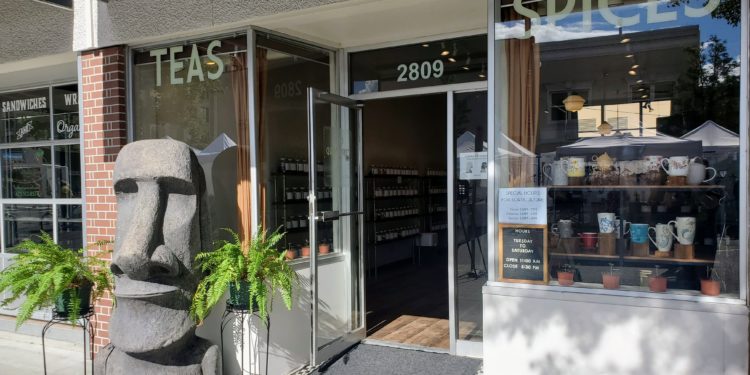
exterior of a tea and spice shop called Chai Cupboard, with a large replica Moai outside

The Tough Reality of Running an Independent Retail Shop in Downtown Everett

It’s been just over two years since my wife and I opened the doors at Chai Cupboard, our loose leaf tea and spice shop in downtown Everett, and I thought it would be a good time to share how things are going for our little mom and pop shop. Can we call ourselves a mom and pop shop if we’re only in our 40s? Whatever, I’m going for it.

In short: It has been and continues to be difficult!

Starting up

Let’s start with what it took just to open our doors. We spent about $32,000 of our own money (no investments, no loans) to start up. This included things like buying the initial inventory, all our jars and other supplies, furniture, and putting in new flooring.

Finding a good location in downtown Everett was a challenge. It seemed like every space we looked at was either way too large (2,000+ square feet), way too expensive ($2,000+ a month), or both. The space we eventually landed in is around 1,100 square feet and costs us just under $1,800 a month. Plus electricity and gas. Plus parking. Plus basic building maintenance, repairs, and real estate taxes. You would think that those last few things should be the responsibility of the landlord that owns the building, but this particular landlord owns such a large portion of downtown Everett that they are able to dictate the terms of the lease to dramatically favor them and there’s basically nothing you can do about it. Fun!

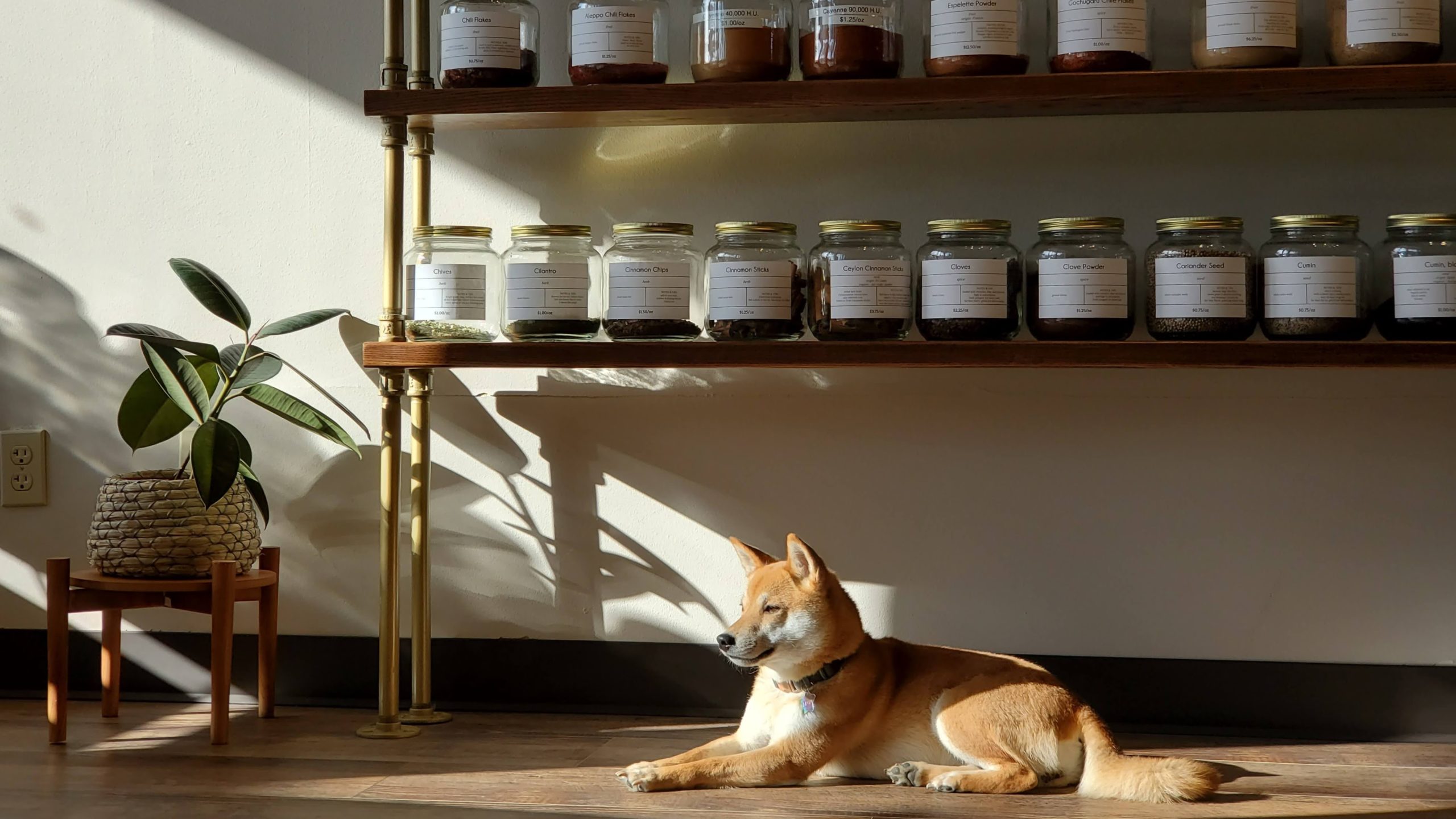
a Shiba Inu named Maya lays contentedly in a ray of sunlight in front of a shelf full of glass jars that contain tea

Keeping the lights on

Okay, so let’s talk about ongoing costs. All together, running the shop five days a week, we need to make about $100 a day in profit to pay our basic bills. That means we need around $200 a day in sales to break even after paying for our inventory and other supplies. So far in 2023 we’re making an average of $117 per day in sales. That’s up from $100 per day during the same period in 2022, but still far short of where we need to be in order just to break even—and these figures are with no employees, just us (mostly my wife) running the shop entirely by ourselves. If we wanted to hire just a single employee at $20 an hour for 20 hours a week, the wages, taxes, and other costs would add up to another $2,000 a month or more than $100 a day.

All of this means that we’re putting about another $1,500 into the shop every month out of our pocket to keep the doors open. To date we have made around $55,000 in revenue, but spent a total of about $128,000, meaning that over $70,000 has come directly out of our pocket to try to make this work.

Expanding our horizons

Since it has been difficult selling enough loose-leaf tea and spices to make ends meet, we have been working on a few different ideas to try to bring in more money. The biggest of these plans was to open a full tea bar, serving things like tea lattes and iced tea. Unfortunately, our space is not equipped with the proper kitchen to obtain the necessary permits from the health department.

Our landlord was open to letting us pay to upgrade their space (how generous of them!) and we were able to get a grant from the city for about $16,000 that we thought would cover the plumbing improvements and appliances we would need. Unfortunately again, once we opened up the walls we discovered that the existing drainage was nowhere near sufficient for the amount of sinks the health department requires. Fixing this would require considerably more work than we originally expected, including cutting a trench into the concrete floor. Between the extra drainage work and the extreme inflation that ratcheted up the cost of everything else while we tried to figure it all out, the total cost of the project ballooned to over $50,000. three glass tea brewers, each with tea currently brewingWe applied for a second grant in hopes of still moving forward, but were denied. So the full tea bar idea is dead unless we find a whole new location with a proper restaurant kitchen, which would of course have much higher rent, somewhat negating the benefit of opening the tea bar at all.
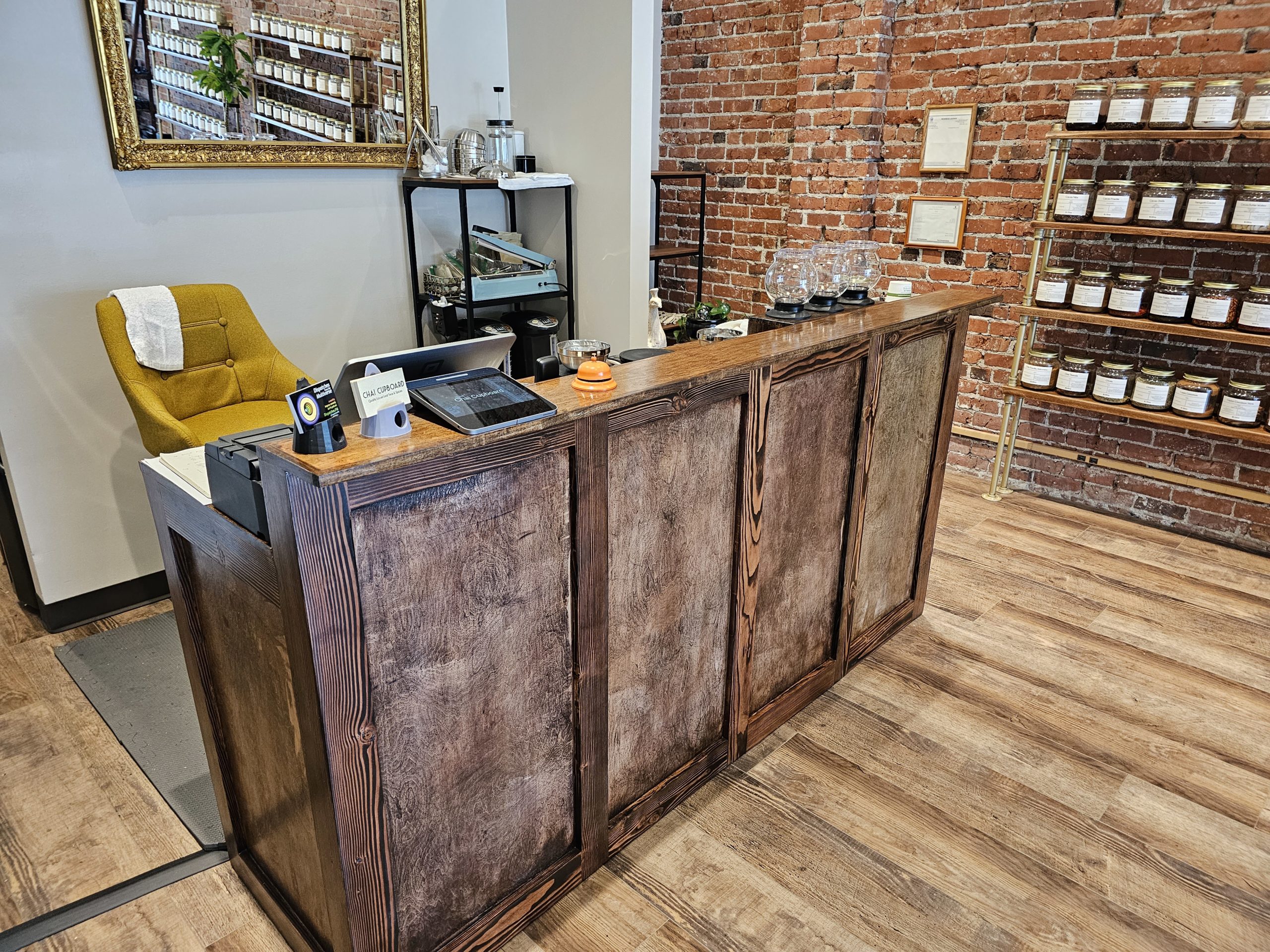
Thankfully as long as we only serve hot tea in a to-go cup, we are not classified by the health code as a “food establishment,” so we can still do that without all of the extra sinks. We have been able to set up three tea brewers on a custom stand that I built out of hardwood, and at least provide a basic cup of tea to-go.

Building the physical and digital space

a custom-built wooden counter holding a register and some tea brewers, in a shop with brick walls and a shelf with jars in the background

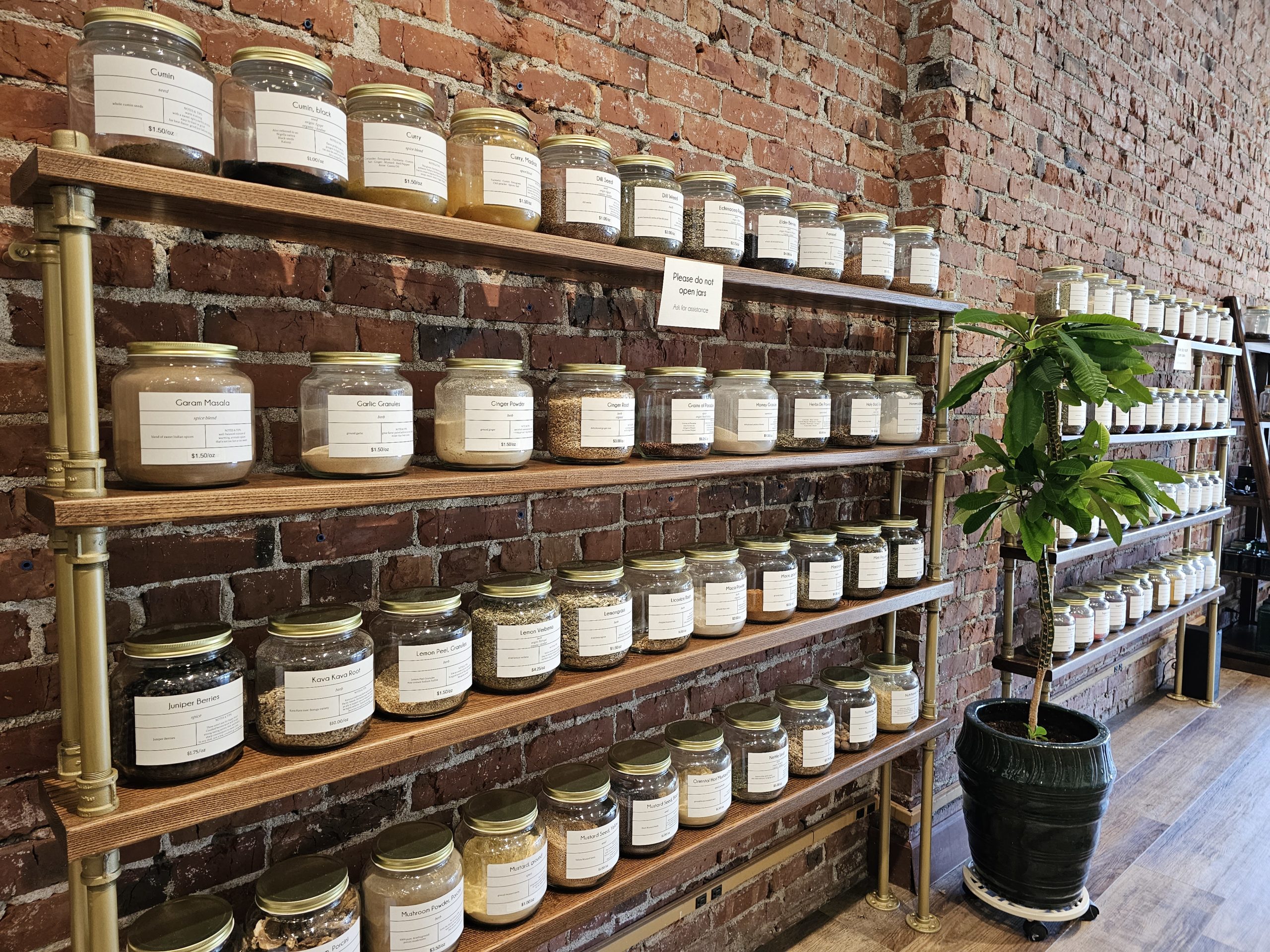
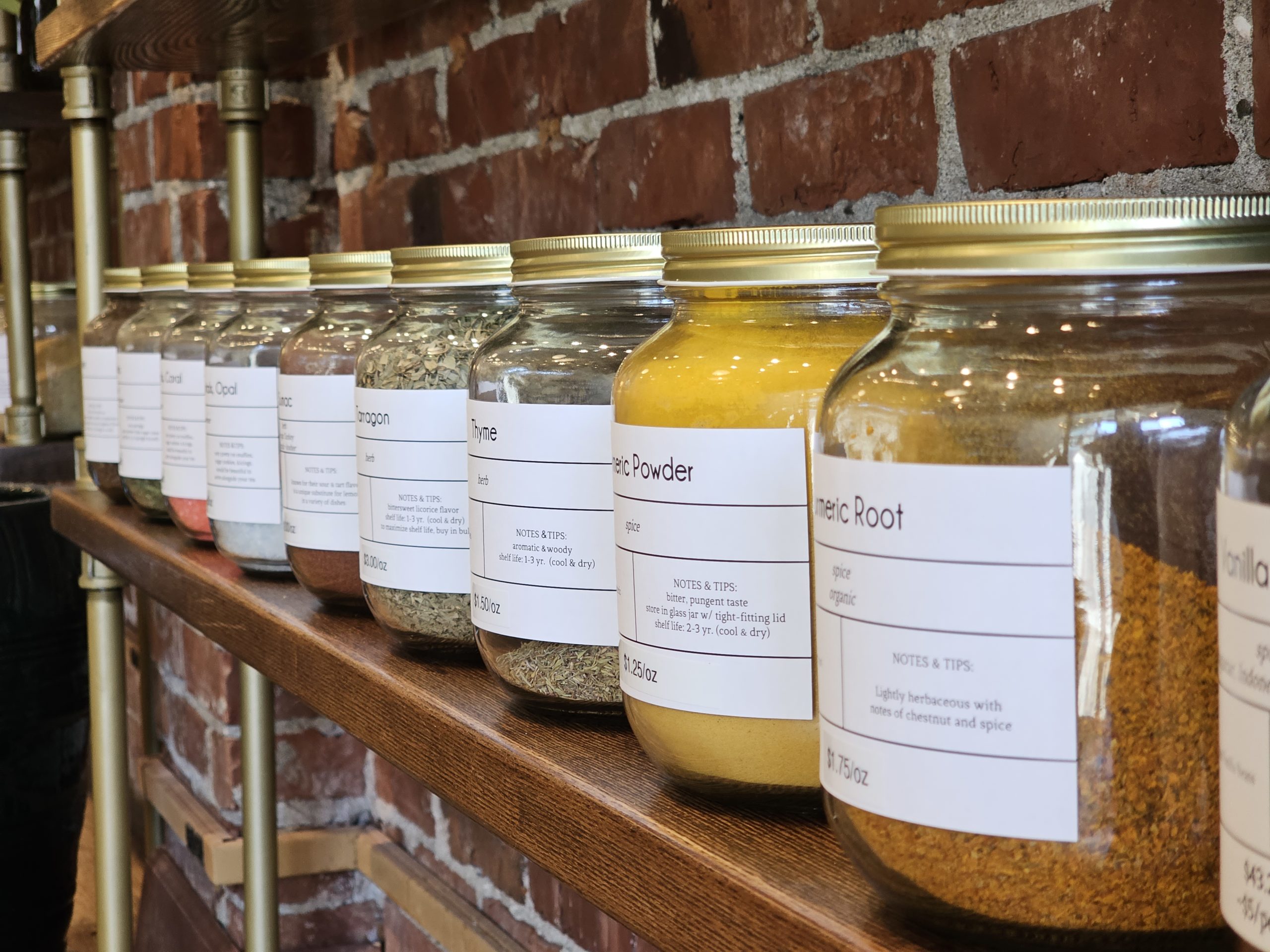
Speaking of building furniture, the shop has given me a good excuse to spend some quality time with my woodworking tools. I built our custom shelves that hold all the jars, as well as the custom main counter, and I’m quite pleased with how they all turned out.

a shelf made of wood and pipe, full of glass jars with spices, in front of a brick wall

Surprisingly, building physical objects like the furniture has been easier than building things in the digital space. While we have had a basic website set up since before we opened, building a proper online shop has been a bit of a pain. Aside from the challenge of synchronizing all of our inventory with an online storefront, to get it properly set up we need to take individual photos of all 200+ of the teas and spices we sell, which is a daunting task.

Once we do get the online side of the store set up with all the photos, another idea we’ve had to increase sales is to set up a tea sampler subscription box, but the economics of subscription boxes is pretty rough. There are competitors in the space that sell a tea box for $20 that includes shipping. It would be difficult for us to make and ship a box of teas for less than $20 in actual cost to us.

So, what’s next?

We have really enjoyed running the shop, learning more about teas and spices, and meeting all the lovely people who have come in over the past two years. To date we have had nearly 2,000 customers, about 25% of which are repeat customers. We have had zero problems with crime, and only one unpleasant run-in with an individual having a drug-induced psychotic episode. Downtown Everett is a great location, and we love the increasing number of events that are happening downtown like Sorticulture, Salty Sea Days, and the Wintertide Festival & Market.

We’re convinced that our shop is a valuable addition to Everett, but it’s tough to keep pouring thousands of dollars into it every single month, and to be so far away from even being able to hire a single person to help out. It is beginning to feel like running a small independent retail shop in downtown Everett may not be viable with the current cost of rent, lack of significant downtown foot traffic, and most people’s default mode of shopping online first. We’ve still got over a year on our current lease, so we’re going to continue trying to make this work, but looking around at the other businesses downtown, it’s easy to see why they’re mostly restaurants, breweries/bars, coffee shops, or retailers who have been around forever and own their own building.

And of course, I haven’t even mentioned the other big complicating factor: In just a few weeks we’re having a baby! This means we’re going to have to dramatically cut back how many hours the shop is even open, due to the aforementioned inability to afford to hire any additional help.

Anyway, if you fancy some tea, stop on by! We’re at 2809 Colby in downtown Everett. And if you have some brilliant idea for how to make this type of business actually turn a profit, please drop me a line and share it!

a row of glass jars full of colorful spices, with white labels and gold lids, sitting on a wooden shelf in front of a brick wall